Exercise on Keto: A Beginner's Plan That Starts With a Walk


You changed how you eat, and now a new question shows up: should I also be working out? And if my legs feel heavy on the stairs this week, is that normal?
Here is the good news. You do not need a gym membership, a perfect plan or a burst of willpower. You need a pair of comfortable shoes and ten minutes. Movement and keto can get along very well, as long as you give your body a little time to adjust.
This guide gives you a simple four-week plan, a sample week, and a few honest notes about what the first weeks may feel like. Start small. Small is how routines are built.
Key takeaways
- In the first two to three weeks of keto, many people feel a dip in energy during hard exercise. It is usually temporary, and it varies a lot from person to person.
- Easy movement, such as walking, is a good place to start. It rarely needs any special fuelling.
- Health bodies suggest that adults build up to about 150 minutes of moderate activity a week, plus muscle strengthening on two days. That is a direction, not a first-week target.
- Water, salt and enough food matter more for a good workout than the exact timing of your meal.
- Missing a day is normal. The plan continues with the next walk.
What happens when you move on keto
When you eat very few carbs, your body gradually leans more on fat for fuel. That switch does not happen overnight. For the first days, and sometimes weeks, your muscles are still learning the new routine.
The first weeks can feel heavier
During this period, hard efforts may feel harder than usual. A hill that was easy last month may leave you out of breath. Some people also meet the tired, foggy days known as the keto flu. If that is you right now, our gentle guide to the first two weeks explains what usually helps.
This is not a sign that you are out of shape, and it is not a reason to stop. It is a reason to turn the intensity down for a while.
Easy movement usually feels fine
Walking, light cycling, swimming at a relaxed pace, stretching and gentle yoga use energy slowly. Most people can do them comfortably from day one. Many say that a short walk actually lifts their mood and energy in the first week.
Hard efforts may need more time
Sprints, heavy lifting and intense classes ask for quick energy. Research on low-carb eating and high-intensity performance is mixed, and the studies are mostly small. Some people feel strong again after a few weeks. Others notice that top-end efforts stay a little harder. Listen to your own body rather than to someone else's result.
| Stage | How movement may feel | What fits well |
|---|---|---|
| Days 1-7 | Lower energy, heavy legs for some | Short walks, stretching |
| Weeks 2-3 | Slowly steadier | Longer walks, light strength at home |
| Week 4 and on | Closer to your usual self for many | Brisk walks, strength twice a week, an optional harder session |
These stages are approximate. Your own timeline may be shorter or longer.
Start with walking
Walking is the most underrated exercise there is. It is free, it is kind to the joints, and you already know how to do it.
The trick is to make the first step almost too easy. Ten minutes after dinner counts. So does getting off the bus one stop early, or walking while you take a phone call.
When ten minutes feels easy, add five. When a flat route feels easy, add a small hill or walk a little faster. A good pace is one where you can talk, but you would not want to sing.
A four-week starter plan
Here is a plan that builds up gently. If a week feels like too much, repeat it. Nobody is keeping score.
- Week 1: ten minutes a day. Walk for ten minutes on at least five days. Any time of day. That is the whole job.
- Week 2: twenty minutes, plus one mini strength session. Stretch the walks to twenty minutes. Once this week, do five minutes of simple moves at home: sit down and stand up from a chair, wall push-ups, and holding a plank on your knees.
- Week 3: thirty minutes, plus two strength sessions. Walk thirty minutes on four or five days. Do the home strength moves twice, ten minutes each time.
- Week 4: find your rhythm. Keep the walks, keep two strength days, and add one thing you enjoy: a bike ride, a swim, a dance class or a hike with a friend.
By the end of week four you are close to the amount of weekly activity that public health guidelines suggest for adults. More important, you have four weeks of proof that you are someone who moves.
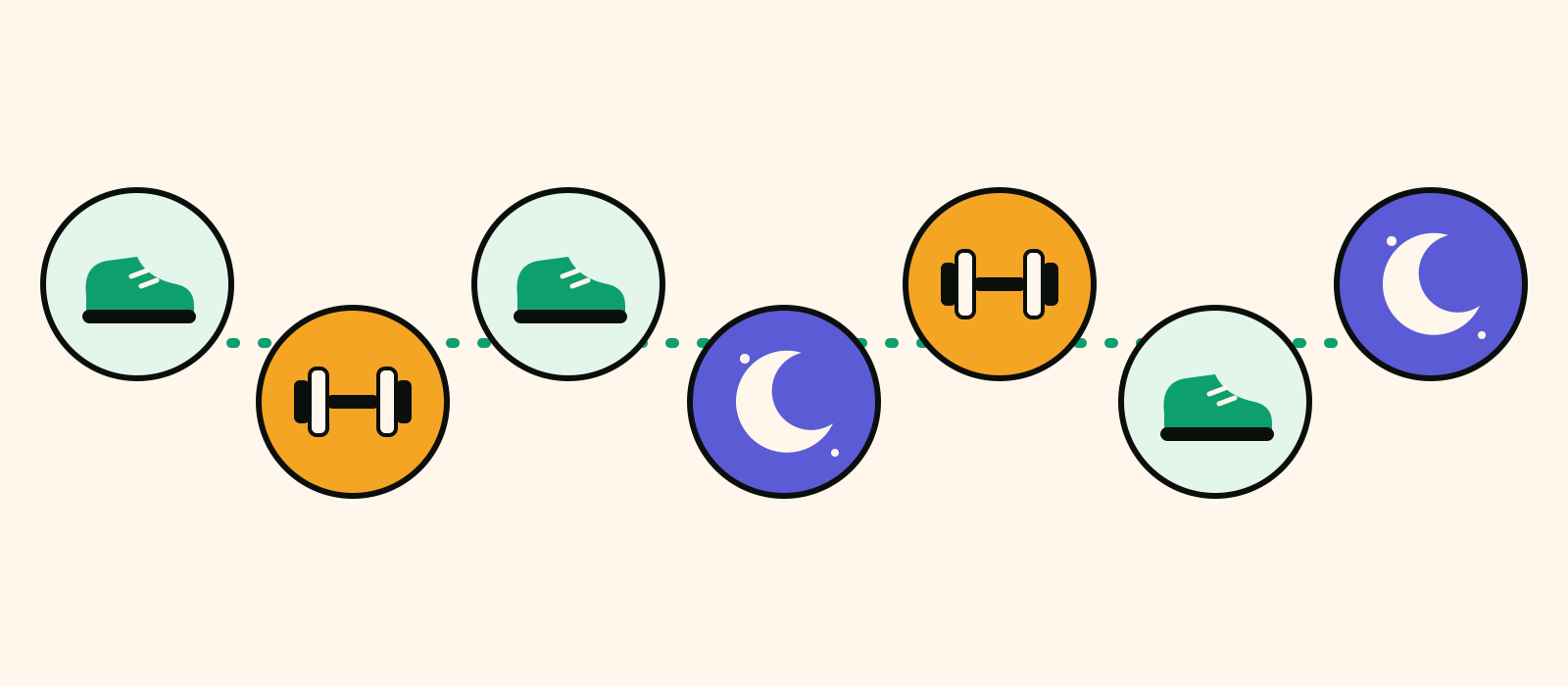
What a week can look like
| Day | Movement | About how long |
|---|---|---|
| Sunday | Brisk walk | 30 minutes |
| Monday | Home strength: chair squats, wall push-ups, plank | 10-15 minutes |
| Tuesday | Easy walk | 20-30 minutes |
| Wednesday | Rest or gentle stretching | 10 minutes |
| Thursday | Home strength, then a short walk | 20 minutes |
| Friday | A longer walk outdoors, with company if you like | 40 minutes |
| Saturday | Rest | - |
Move the days around to fit your life. The pattern matters more than the calendar.
Eating and drinking around your workout
You do not need a special sports diet. A few simple habits cover most of it.
Water and salt come first
On keto the body tends to hold less water and to let go of more sodium, especially in the first weeks. Add sweat on top, and you can end up feeling dizzy or crampy during a workout that would normally be easy.
Drink a glass of water before you head out, and take a bottle with you on longer walks. Salting your food to taste usually helps too. Our beginner's guide to electrolytes covers sodium, potassium and magnesium in more detail.
Eat enough, especially protein
Muscles that work need building material. Include a good source of protein in your meals: eggs, fish, chicken, meat, cheese, tofu. Do not combine a new exercise routine with eating very little. Tired and hungry is not a plan that lasts.
Training during a fast
If you also practise intermittent fasting, an easy walk before your first meal is fine for most people. Save strength sessions and harder efforts for your eating window, or place them shortly before a meal. Keep your fasts short and comfortable. If you feel shaky or light-headed, stop, eat and rest.
Staying consistent when life gets busy
The plan that works is the one you still follow in three months. A few things make that more likely.
- Lower the bar on hard days. Five minutes still counts. It keeps the habit alive.
- Prepare the night before. Shoes by the door, bottle filled. Fewer decisions in the morning.
- Track the streak, not the speed. A tick on the calendar for every day you moved is surprisingly motivating.
- Respect rest. Rest days are when the body adapts. Good sleep is part of training, not a break from it.
- Missed a day? Fine. One missed day changes nothing. Just take the next walk.
Celebrate the small wins: the first week completed, the first hill that felt easier, the first time you went out even though you did not feel like it. Those are the moments a routine is made of.
FAQ
Can I exercise in my first week of keto?
Yes, for most people gentle movement such as walking is fine and often feels good. Keep the intensity low for now and come back to harder sessions when your energy returns.
Do I need carbs before a workout?
For walking and light strength work, most people do not. If you do long or very intense sessions and feel weak, discuss your options with a dietitian or doctor who knows your situation.
Is it safe to train while fasting?
Easy movement during a short fast suits many people. If you feel dizzy, shaky or unwell, stop and eat, and keep harder sessions inside your eating window.
I get muscle cramps when I exercise. What can I do?
Cramps in the early weeks are often linked to fluids and minerals. Drink water, salt your food to taste, and eat potassium and magnesium rich foods such as avocado, leafy greens and nuts. If cramps continue, ask your doctor.
How much exercise is enough?
Guidelines for adults point to around 150 minutes of moderate activity a week, plus muscle strengthening on two days. Any amount is better than none, and you can build up slowly.
Sources
www.who.intwww.who.intThis article is general information and not medical advice. If you have a medical condition, are pregnant or breastfeeding, or take medication, ask your doctor before changing your diet or starting a new exercise routine.
This article is general information, not medical advice. Talk to your doctor before changing how you eat or fast, especially if you have a medical condition, are pregnant or take medication.

 By Luna Hayes

 By Nora Bennett