Cottage Cheese Flatbread Wraps: Soft, High-Protein Keto Wraps

- Total time
- 45 min
- Servings
- 4
- Net carbs
- 2.3 g
- Difficulty
- Easy
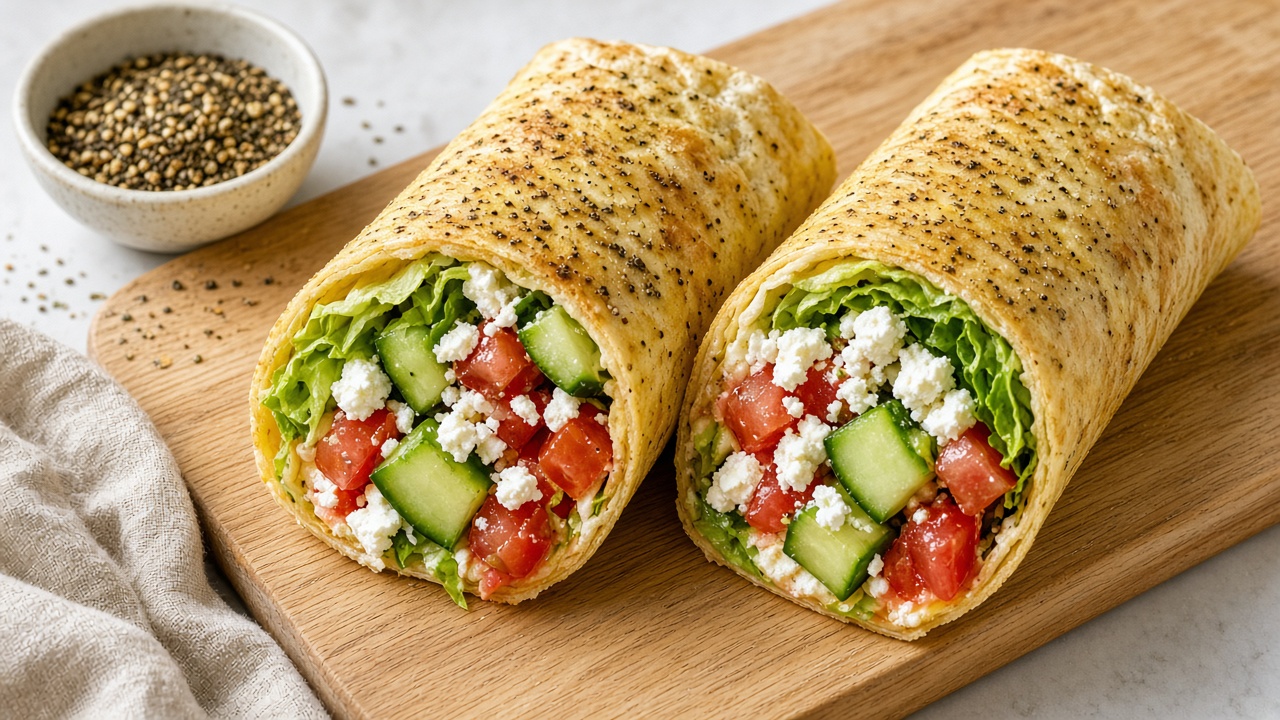
Some days you want a wrap: something soft you can fold around a salad, an egg filling or a few slices of smoked salmon and eat with your hands. Regular tortillas and pitas are mostly flour, though, so they don't fit a keto day. This flatbread is built from cottage cheese and eggs instead.
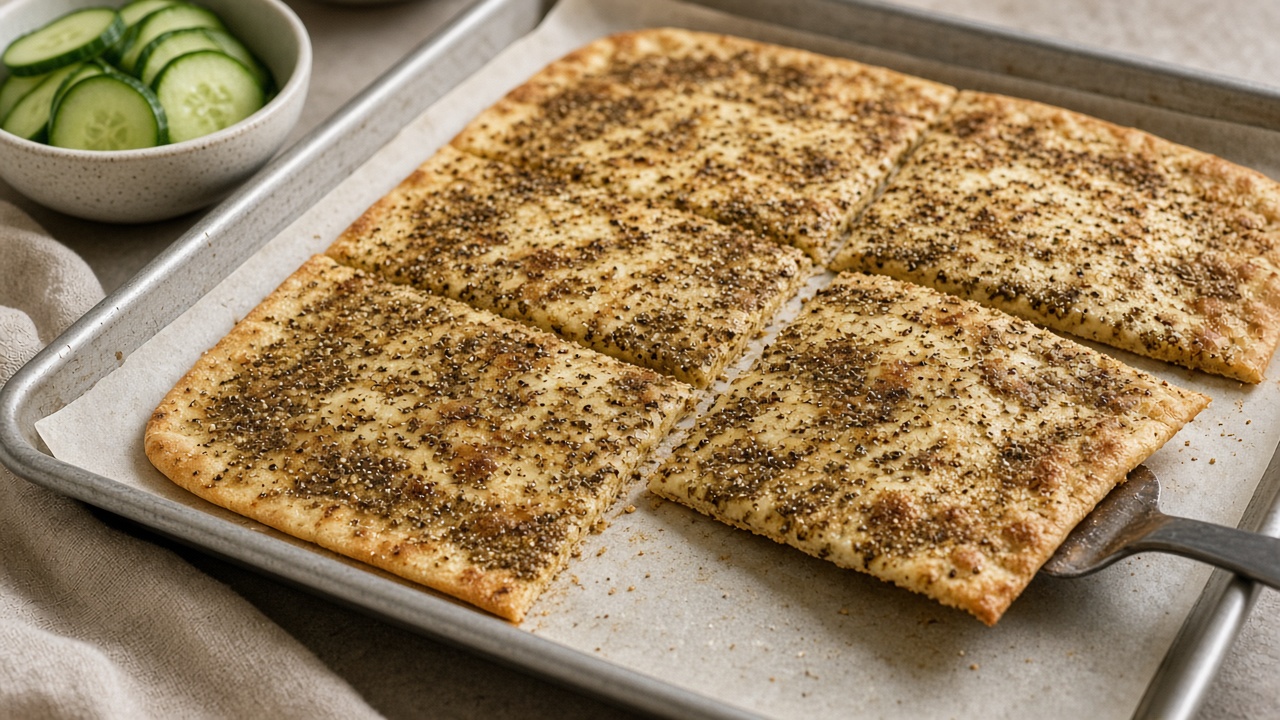
This is the first recipe in our cottage cheese series. You blend cottage cheese, eggs and a little parmesan until smooth, spread the batter thin on a lined sheet pan, sprinkle it with za'atar and bake it until dry and golden. One sheet cuts into four soft, bendy wraps.
Each wrap comes to about 2.3 g net carbs, 11 g protein, 6 g fat and 113 kcal before fillings. It takes about 45 minutes, most of it in the oven, and it's an easy recipe.
Fasting: Any calories break a fast. These wraps are protein-forward and fairly gentle, so two of them with vegetables make a reasonable first meal after a fast. Cottage cheese has some lactose, so if dairy bothers you, choose a lactose-free one.
Key takeaways
- Blend the cottage cheese and eggs completely smooth. Whole curds make holey sheets that tear.
- Spread the batter into an even layer that fills the pan, a little under 1/4 inch (about 4 mm) thick, and bake until the top is dry and set, not shiny.
- Peel the sheet after about 5 minutes and fold the wraps while they're still slightly warm.
- These are soft, protein-rich wraps, not a tortilla copy. They fold well but don't stretch.
- This is a dairy recipe, so keep the fillings dairy or pareve.
What makes this flatbread work
The idea comes from a simple home-cooking trend: blend cottage cheese with eggs, bake it thin, and you get a sheet that holds together like a crepe. The eggs set in the oven and give it structure. The cottage cheese adds protein and a mild, milky flavor, and it keeps the sheet tender instead of rubbery.
We add finely grated parmesan, which helps the edges brown and makes the sheet a little sturdier, plus za'atar for an Israeli touch. If you'd like a tighter roll that cracks less, stir in 1 tablespoon of psyllium husk powder or 2 tablespoons of almond flour. The almond flour adds about 0.5 g net carbs per wrap.
Full-fat cottage cheese gives the softest result. Cleveland Clinic notes that nonfat versions have less protein and are less filling, and that plain cottage cheese is low in carbs, so skip flavored tubs with fruit or added sugar.
Ingredients (one 9x13-inch sheet, 4 wraps)
- 1 cup (225 g) full-fat cottage cheese, plain, small curd
- 2 large eggs
- 1/4 cup (20 g) finely grated parmesan, with a kosher certification
- 1 teaspoon za'atar or Italian seasoning
- 1/4 teaspoon salt, only if your cottage cheese is low-sodium
- Olive oil spray for the parchment
- Optional, for sturdier wraps: 1 tablespoon psyllium husk powder or 2 tablespoons almond flour
Cottage cheese and parmesan are both salty, which is why we usually skip added salt. Time: about 5 minutes to blend, 30 to 35 minutes to bake and 5 minutes to cool, about 45 minutes in all. Difficulty: easy.
How to make cottage cheese flatbread wraps
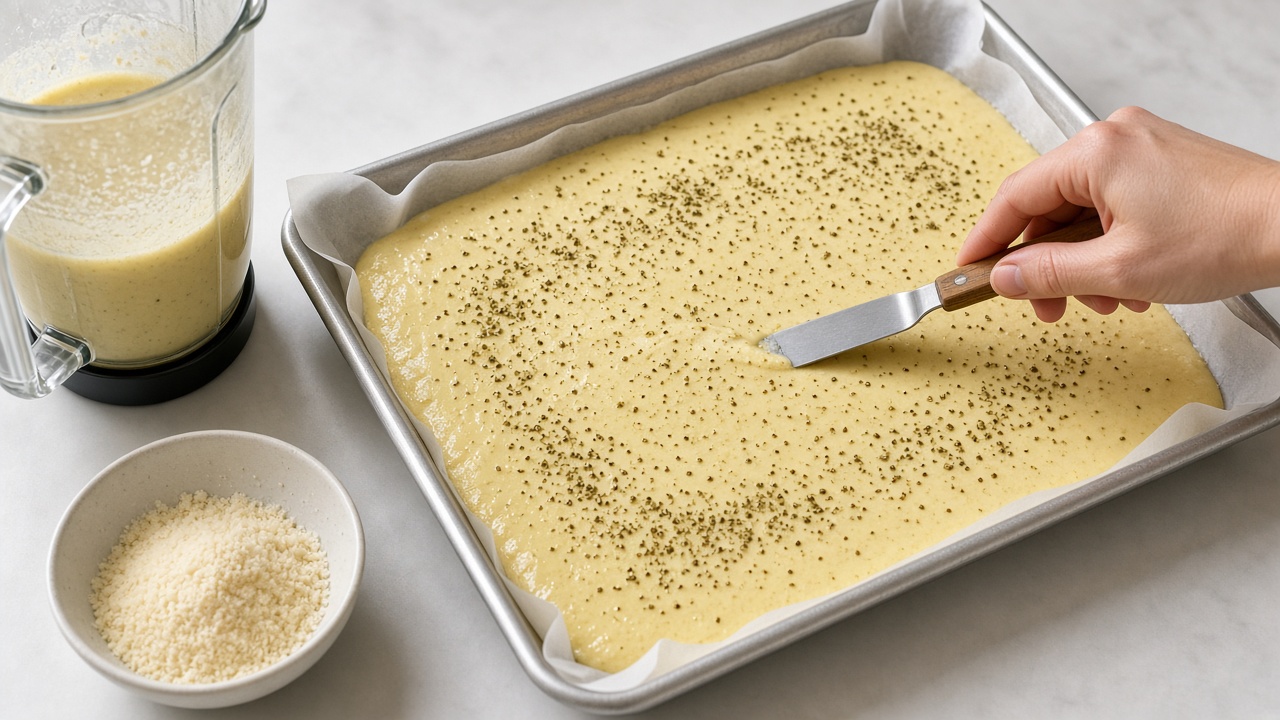
- Heat the oven to 350°F (175°C). Line a 9x13-inch sheet pan with parchment and spray it lightly with olive oil.
- Pour off any liquid sitting on top of the cottage cheese.
- Put the cottage cheese, eggs and parmesan in a blender, or use a stick blender in a tall cup. Blend for 30 to 60 seconds, until completely smooth and pourable. Add the salt and the psyllium or almond flour now, if using, and pulse to mix.
- Pour the batter onto the parchment and spread it into an even layer that fills the pan, a little under 1/4 inch (about 4 mm) thick. Thick spots stay eggy, so keep it level.
- Sprinkle the za'atar evenly over the top.
- Bake for 30 to 35 minutes, until the top looks dry and set and the edges are golden. If the center still looks wet or shiny, give it 3 to 5 more minutes.
Ovens vary, so start checking at 25 minutes the first time you make it. 7. Let it cool on the pan for about 5 minutes. Then gently peel the sheet off the parchment and cut it into 4 rectangles. 8. Fill and fold the wraps while they're still slightly warm, when they bend most easily.
USDA food-safety guidance says dishes with eggs should reach 160°F inside. A thin sheet that is fully set and dry all over gets there; if you have a probe thermometer, you can check a thicker spot.
Nutrition at a glance
These are estimates from USDA food-composition data for the whole sheet, divided into 4 wraps. They don't include fillings, so add those separately. Your numbers will shift a little with your brand of cottage cheese.
| Per wrap (1 of 4) | Amount |
|---|---|
| Net carbs | about 2.3 g |
| Total carbs | about 2.4 g |
| Fiber | about 0.1 g |
| Protein | about 11.3 g |
| Fat | about 6.2 g |
| Calories | about 113 kcal |
If you cut the sheet into 2 large wraps instead, each one comes to about 4.7 g net carbs, 22.6 g protein, 12.5 g fat and 227 kcal.
Fillings, storage and swaps
Because the wraps contain cheese, they are dairy (chalavi). That rules out deli meat and chicken, but leaves plenty of good options:
- Israeli salad wrap: diced cucumber and tomato, lettuce and crumbled feta, with a drizzle of olive oil.
- Smoked salmon wrap: cream cheese, smoked salmon, cucumber and dill. Fish is pareve, but some families don't serve fish with dairy, so follow your own custom.
- Egg salad wrap: chopped hard-boiled eggs with mayonnaise and fresh herbs.
A few practical notes:
- Storage: refrigerate the wraps within 2 hours, with parchment between them, and use them within 3 to 4 days, in line with USDA guidance for cooked egg dishes. Warm them for a few seconds in a dry skillet so they're pliable again.
- Lactose: as a fresh cheese, cottage cheese has more lactose than aged cheeses. A lactose-free cottage cheese works the same way.
- Allergens: these wraps contain milk and egg, and the almond flour option adds tree nuts.
- Kosher: hard cheeses like parmesan need reliable kosher supervision, so choose one with a certification you trust, or swap in another kosher hard cheese.
If you like egg-based breakfasts, our spinach and feta egg muffins make another easy make-ahead option.
FAQ
Do these taste like eggs?
A little. The cottage cheese and parmesan soften the egg flavor, and the za'atar adds a lot. With a filling inside, most people notice the topping more than the wrap.
Why did my wrap crack when I rolled it?
It was probably overbaked or fully cold. Fold the wraps while they're still slightly warm, or add the psyllium for a tighter roll next time.
Why is my sheet soggy or sticking?
The cottage cheese was too watery, the batter was spread too thick, or it needed more time in the oven. Drain loose cottage cheese and bake until the top is dry.
Can I make them ahead?
Yes. Keep them in the fridge for 3 to 4 days with parchment between the wraps, and warm them in a dry pan before filling.
Can I use low-fat cottage cheese?
You can, but the wraps turn out drier and more rubbery. Full-fat cottage cheese gives the most tender result.
Sources
Nutrition numbers are estimates from USDA FoodData Central. For more on cottage cheese and on cooking and storing egg dishes safely, see:
health.clevelandclinic.orghealth.clevelandclinic.org www.fsis.usda.govwww.fsis.usda.govThis recipe is for general information, not personal medical advice. If you have a food allergy, lactose intolerance, diabetes, or another health condition that affects how you eat or fast, talk with your doctor before changing your routine.
Ingredients
- 225 gfull-fat cottage cheese · plain, small curd; pour off any liquid
- 2large eggs
- 20 gparmesan · finely grated, with a kosher certification
- 1.5 gza'atar · or Italian seasoning
- 1.5 gsalt · only if the cottage cheese is low-sodium
- olive oil spray · for the parchment
- 5 gpsyllium husk powder · optional, for a tighter roll (or 2 tbsp almond flour)
Steps
- Heat the oven to 350°F (175°C). Line a 9x13-inch sheet pan with parchment and spray it lightly with olive oil.
- Pour off any liquid sitting on top of the cottage cheese.
- Blend the cottage cheese, eggs and parmesan for 30 to 60 seconds until completely smooth. Add the salt and psyllium now, if using, and pulse to mix.
- Pour the batter onto the parchment and spread it into an even layer that fills the pan, a little under 1/4 inch (about 4 mm) thick.
- Sprinkle the za'atar evenly over the top.
- Bake 30 to 35 minutes, until the top is dry and set and the edges are golden. Give it 3 to 5 more minutes if the center looks wet. Ovens vary, so start checking at 25 minutes the first time you make it.
- Cool on the pan about 5 minutes, peel the sheet off the parchment and cut it into 4 rectangles.
- Fill and fold the wraps while they're still slightly warm.
Tip. Nutrition is per wrap (1 of 4), without fillings or the optional psyllium/almond flour (almond flour adds about 0.5 g net carbs per wrap). Fold the wraps while slightly warm; fully cold ones can crack. Refrigerate within 2 hours with parchment between wraps and use within 3 to 4 days; rewarm in a dry skillet. Contains milk and egg. Dairy (chalavi): use dairy or pareve fillings only.
Nutrition per serving
| Net carbs | 2.3 g |
|---|---|
| Total carbs | 2.4 g |
| Fiber | 0.1 g |
| Protein | 11.3 g |
| Fat | 6.2 g |
| Energy | 113 kcal |
Estimated by Nora Bennett (AI).
General information, not medical advice. Talk to your doctor before you change your diet or start fasting.